
When leaders have trouble accepting influence from each other, or influencing others, there is often arguments and defensiveness. One person makes a complaint or suggestion, and the other responds with a statement of denial or refusal. There are attacks and counter-attacks. No one wants to admit he or she is wrong. Neither one wants to be the “loser.” The problem is, in those situations everyone loses.
What is the alternative?
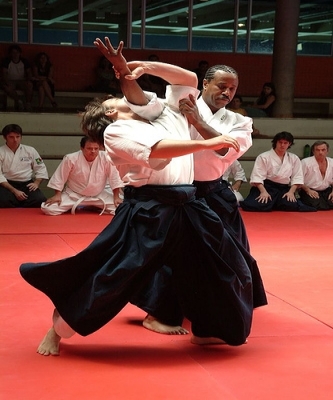
The only reasonable alternative is to accept influence. If you want to influence others and effectively deal with conflict, you have first to be willing to be influenced. In Aikido, a Japanese form of marital art, you must “yield to win.” Unlike ordinary self-defense systems that are based on arousing the fighting or competitive spirits, Aikido physical arts are based on non-collision and non-resistance with an opponent’s forces so that anyone, young or old, large or small, man or woman can employ it with the least amount of physical strength.
So what do you do when someone pushes you? In our western world most people will say that you push back. But if you do this, You can win, you can lose, or there can be a stalemate — none of which is conductive to harmony, influence, and mutual satisfaction.
The Aikido way
Entering and blending. In Aikido, you move toward the attacker and slightly off the line of attack, simultaneously making a turning maneuver that leaves him or her next to the attacker and facing in the same direction. In this position, you are looking at the situation from the attacker's viewpoint but without giving up your own viewpoint. This immediately multiplies your options.
Likewise, if instead of meeting a verbal attack with a verbal counterattack you respond first by coming around to the other’s point of view by entering and blending. It is very disarming. It changes the energy of the conversation allowing the two of you to approach the conflict from the same perspective and to build understanding. Questions you could ask are:
- Could you please explain your thinking to me?
- What are your feelings about this issue?
- Could you tell me why this is so important to you?
By doing this, you enhance the possibility of influencing the other also and finding a way to meet the needs of all parties.
Next week we'll write about guidelines for the art of blending.
Remember. . .
Blending isn't the answer for every situation, but it should always be the first answer. It's a means by which you can multiply your options in responding to any kind of attack.
Do you need to improve your dialogue skills to “enter and blend”? Don’t lose valuable time. Contact me today for a free, no obligation interview to decide how can I help you.
(Ideas taken from: The Way of Aikido: Life Lessons from an American Sensei by George Leonard