
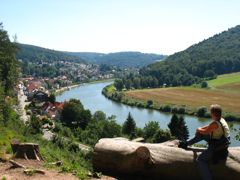
In the fast paced world we live we tend to think we do not have time to pause, be silent, think, and reflect. The faster you run, the more you need to draw air in. Saying you don’t have time to pause and be silent would be like saying you do not have time to breathe, because you are running. I will like to propose that we don't have time NOT to pause! You see, silent reflection helps us hold the door of our mind open long enough for new perceptions, ideas, and solutions to emerge.
Conversations that matter need breathing space. You need to slow down the conversation enough to let insight happen in the space between words. That is the only way you can discover what the conversation really wants and needs to be about. Leaders need to talk with people, not at them.
Let’s review some of the good reasons we have for pausing:
- Pauses are important for learning to occur. New information must be processed. Making meaning of new data requires connecting into our knowledge system, sorting, comparing, analyzing. This takes time. Time to climb up and down the ladder of inference helps us see the difference between what we think and what leads us to think it. We need to be still in order to gain knowledge.
- Periods of silence and reflection allow for more clarity, objectivity, and discernment. Silence is key for reaching new insights and breakthroughs in thinking. By quieting ourselves, we better learn to hear the softer slower murmuring melodies that arise from the collective wisdom.
- Pauses create a space. A space where listening can occur. A space where you slow down long enough to see beneath the surface, and to move to productive dialogue. A pause lets you give attention to the “spaces between.” Those moments of collective silence hold the ground for emergence, a realm of potential from which the creative winds arise.
Silence is a state. The dictionary says it is the cessation of rage, agitation, or tumult; calmness; to put to rest; to quiet; a period of time without speech or noise. William Penn said: "True silence is the rest of the mind; it is to the spirit what sleep is to the body, nourishment and refreshment."
I want to invite you to hold A dialogue with silence
Ask yourself the following questions and take time to pause, and silently write down your answers.
- How comfortable or uncomfortable are you with silence? What in your personality, background, or present experience makes it so?
- Think about a group you relate to in your work. What happens when there is a silent pause? How do you feel when it happens? Could silence add value to your interactions? How could your group use silence to enhance its effectiveness?
The more emotionally loaded the subject, the more silence is required. There are signs that convey a dialogue is deteriorating into a discussion, in urgent need of time for silent reflection and for a slower rhythm:
- Talking over someone else, interrupting before he/she has finished.
- Knee-jerk responses with little or no thought
- Jumping to concussions before gaining enough clarity on an issue
- Formulating your response while someone is speaking, and therefore stopping listening.
- At the smallest brake in the conversation jumping in with your own agenda.
- Talking in circles without going anywhere, repeating the same conversation with nothing new emerging out of it.
- Monopolizing the conversation with long speeches and no opportunity for questions or clarification.
- Defensiveness resulting in an escalation of negative feelings and no problem-solving.
After a time of dealing with a difficult issues and taking action on it, it is important to set time aside and reflect on the content, the process, and the procedures followed in problem solving. We can also correct distortions in our reasoning and attitudes and see the weaknesses and strengths of our actions. In this way, learning occurs, and thoughtful planning takes place for better performance in the future.
As a leader you might not have time every day to take a walk in a garden and be silent (especially during the holidays!), but you can access the garden of your mind. Set aside the clutter and noise, and connect with your "reflecting pool" to find and reach deeper truths, and to tap the energy and creativity that a reflecting pause can bring. When your conversations have silences, reality may be interrogated, learning provoked, challenges tackled, and relationships enriched. It pays to take time for silence!
What are your experiences with silence? What do you think about this subject? Your comments are welcomed and appreciated!
